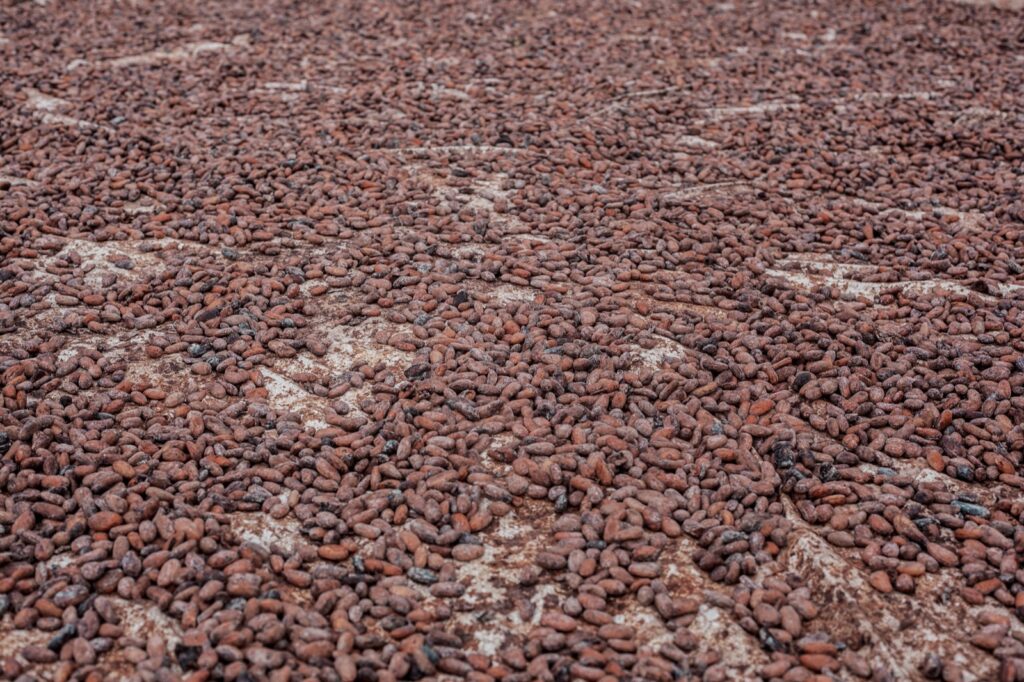
Ecuador will export around 623,000 metric tons of cocoa in 2026, and a growing share of it ships from producers who took control of their own export process. If you grow or collect quality cacao and want to stop selling at the farm gate, this is the roadmap — the same sequence we walk producers through at KATUNA Trade.
Step 1: Register as an exporter with SENAE
Exporting starts with Ecuador’s customs authority. You need an RUC in active status, a digital signature certificate (TOKEN), and registration as an exporter in ECUAPASS, SENAE’s electronic customs platform. The process is free and done online — but errors in your taxpayer profile will surface here, so clean them up first.
Step 2: Obtain AGROCALIDAD certification
Cocoa is a regulated plant product. Your operation — farm, collection center or fermentation facility — must be registered with AGROCALIDAD, and each export lot needs a phytosanitary certificate confirming it meets the importing country’s plant health requirements. Build the relationship early: inspection scheduling is the step producers most often underestimate.
Step 3: Classify your product
Cocoa beans travel under HS code 1801.00 (cacao en grano, entero o partido, crudo o tostado). Derivatives — liquor, butter, powder — carry their own codes and different documentary requirements. Correct classification determines duties at destination and which certificates apply, so confirm it before quoting any buyer.
Step 4: Find a buyer — or work with a trading house
Direct relationships with chocolate makers command the best prices but demand consistent quality, volume and communication. A trading house takes a margin but brings buyers, quality control and export experience you do not have to build alone. Understand what you are selling: if your beans are Nacional fino de aroma, the premium segment is your market — and Ecuador’s reputation opens doors that bulk origins cannot.
Step 5: Negotiate Incoterms
FOB Guayaquil is the standard for Ecuadorian cocoa: you deliver the container loaded on the vessel; the buyer pays freight and insurance from there. Resist quoting CIF until you have shipping experience — the freight risk you assume is real money.
Step 6: Coordinate logistics
Book the container, arrange transport to port, complete fumigation with certified providers, and insure the cargo to the point where risk transfers. Moisture matters: beans must ship at 7% maximum humidity with proper ventilation planning, or you will deliver mold instead of cocoa.
Step 7: File the export declaration (DAE) in ECUAPASS
The Declaración Aduanera de Exportación consolidates your invoice, packing list, and certificates. Once SENAE authorizes departure and the vessel sails, ECUAPASS issues the definitive DAE — the document that closes the customs side of your export.
Step 8: Get paid
Letters of credit protect first-time relationships; established programs typically run on wire transfer against documents. Whatever the instrument, match payment terms to document release — never surrender the bill of lading before your money is secured.
Mistakes first-time exporters make
- Quoting prices without calculating the full cost chain (fumigation, port charges, certificates, financing).
- Mixing varieties or fermentation batches in one lot — buyers test, and one bad container ends a relationship.
- Ignoring destination-market regulation: EU buyers now require EUDR traceability data before they can import your beans at all.
- Shipping without confirmed payment security.
How KATUNA Trade supports producers
We accompany producers through every step — registration, certification, buyer matching, logistics and documentation — through our export operations and consulting services, with legal review by registered foreign trade attorneys. You keep ownership of your product and your margin; we make sure the process does not eat it.
Ready to export your cacao? Contact KATUNA Trade for export consulting.