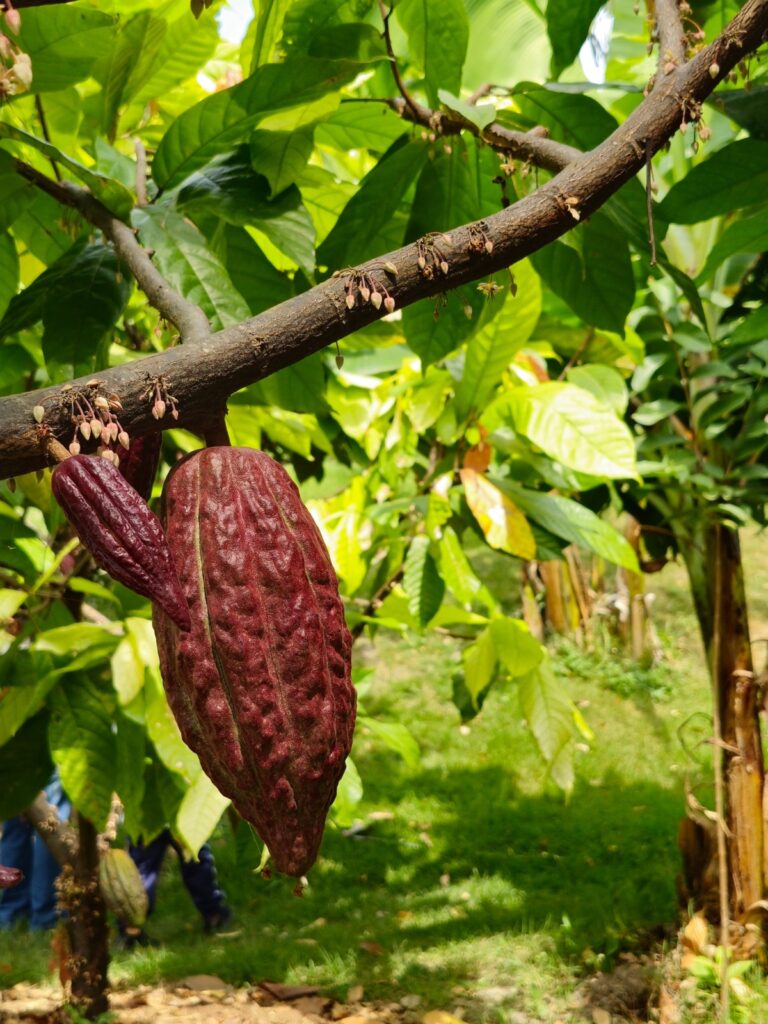
Ecuador enters 2026 holding a position no other origin can claim: more than 56% of the world’s fine flavor cocoa comes from its volcanic soils. But for European buyers, quality alone no longer closes the deal. The EU Deforestation Regulation (EUDR) has changed what it means to be a reliable supplier — and compliance, not just flavor, is now the real differentiator.
What EUDR actually requires
The EUDR, which entered into force for large operators in 2025 and extends to all companies through 2026, prohibits placing cocoa on the EU market unless the importer can prove it was not grown on land deforested after December 2020. In practice, that means geolocation traceability down to the exact farm plot: GPS polygons for every parcel, verified against satellite deforestation data, and a due diligence statement filed with the EU information system before the container ships.
For an origin built on hundreds of thousands of smallholder farms, this is a structural challenge. It is also an enormous opportunity for the exporters who get it right first.
A paradoxical year for Ecuadorian cocoa
The numbers tell a double story. Ecuador is projected to export around 623,000 metric tons of cocoa in 2026 — a historic volume that reflects a decade of steady productivity gains. At the same time, export revenues fell roughly 59% between January and April compared with the previous year, as world prices collapsed from their 2024–2025 records.
When margins compress, differentiation decides who keeps their buyers. Documented, EUDR-ready fine flavor cocoa retains premium demand in Hamburg, Amsterdam and Antwerp; anonymous volume does not.
What buyers in Germany, the Netherlands and Belgium now expect
- Plot-level geodata for every lot, delivered in formats compatible with their due diligence systems.
- Chain-of-custody documentation connecting farm, fermentation center, exporter and vessel.
- Deforestation-free verification against the December 2020 cutoff.
- Sanitary and quality certification — AGROCALIDAD phytosanitary certificates, fermentation and humidity specs.
European buyers are consolidating their supplier lists around exporters who can hand over this package without friction. Those who cannot are being quietly dropped, regardless of how good their beans taste.
Ecuador’s structural advantage
Here is the good news: Ecuador is better positioned for EUDR than almost any competing origin. Its cocoa grows largely in established agroforestry systems with low recent deforestation pressure, unlike frontier regions elsewhere. The country’s farm registry and traceability infrastructure — anchored by AGROCALIDAD — gives exporters a head start that West African supply chains are struggling to match.
How KATUNA Trade handles EUDR-ready sourcing
At KATUNA Trade we built our sourcing model around verification at origin. Every lot we handle is backed by AGROCALIDAD certification, plot-level traceability records, and the export documentation package European due diligence teams require — before the beans reach port. Our legal team, led by registered foreign trade attorneys, reviews contractual and regulatory compliance so our buyers never discover a documentation gap after the vessel sails.
Sourcing fine flavor cocoa for the EU market? Contact KATUNA Trade for EUDR-compliant sourcing from Ecuador — traceable, certified, and ready for your due diligence file.