In casual English, “banana” and “plantain” sometimes get used as if they’re just different sizes of the same fruit. They’re not — and a buyer who conflates them is likely to end up requesting the wrong spec sheet, the wrong packing standard, or the wrong product entirely for their intended channel.
Cavendish: the dessert banana
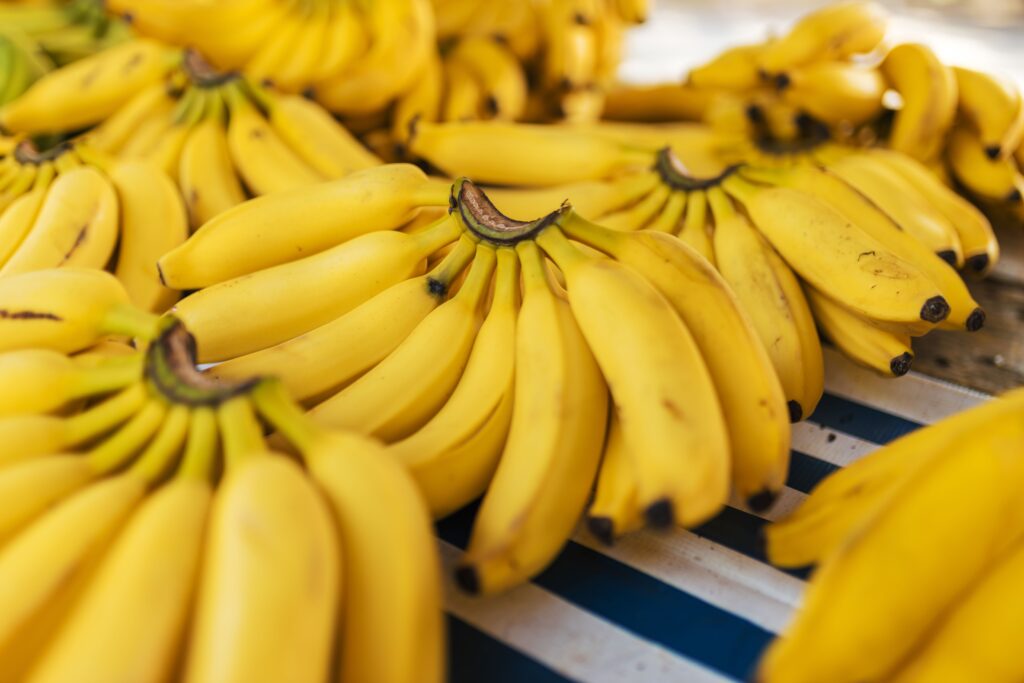
Cavendish is the variety behind nearly every yellow banana sold internationally. It’s harvested green and firm, then ripens off the plant during transit and storage — which is precisely why banana logistics revolves around controlled ripening rooms and careful cold-chain timing rather than waiting for fruit to ripen on the tree.
Cavendish wasn’t always the dominant export variety. Its predecessor, Gros Michel, dominated global banana exports until a fungal disease — Fusarium Race 1 — wiped it out commercially in the mid-20th century. Cavendish took over specifically because it resisted that disease. We’ve written separately about the current threat Cavendish itself faces from a related fungus, which is worth understanding if biosecurity and supply continuity matter to your sourcing decisions.
Plantain: the cooking banana
Plantain looks similar to banana at a glance but is a genuinely different product for buying purposes. It’s higher in starch, lower in sugar, and isn’t eaten raw the way Cavendish is — it’s cooked, whether fried, boiled, or baked, at various ripeness stages ranging from green (starchy, savory preparations) to fully black-ripe (sweeter, dessert-style preparations).
Plantain moves through different channels than dessert banana. It’s a culinary staple specifically in Latino, Caribbean, and West African cuisines, and the buyers sourcing it — specialty grocers, ethnic-food distributors, foodservice operations serving those cuisines — are frequently different from the buyers sourcing Cavendish for general retail.
Why this distinction matters for your spec sheet
If you’re sourcing both products from the same exporter, don’t assume shared specifications:
- Grading and caliber standards differ. Cavendish grading centers on caliber (diameter) and Brix (sugar/ripeness); plantain buyers care more about size uniformity for consistent cooking and starch content at the target ripeness stage requested.
- Packing and ripening-stage requirements differ. Plantain is frequently shipped and sold at a specific ripeness stage requested by the buyer (green for savory use, riper for sweet preparations) rather than the more standardized green-harvest, ripen-in-transit model used for Cavendish.
- Documentation and demand patterns differ. Plantain demand tends to track ethnic and regional population centers more directly than general banana demand, which matters for forecasting order timing and volume.
Sourcing both through KATUNA Trade
KATUNA exports both Cavendish banana and plantain, with separate grading and packing specifications for each. If you’re not sure which product actually fits what you’re building — or you need both under one supplier relationship — that’s a conversation worth having directly rather than assuming one spec sheet covers both.