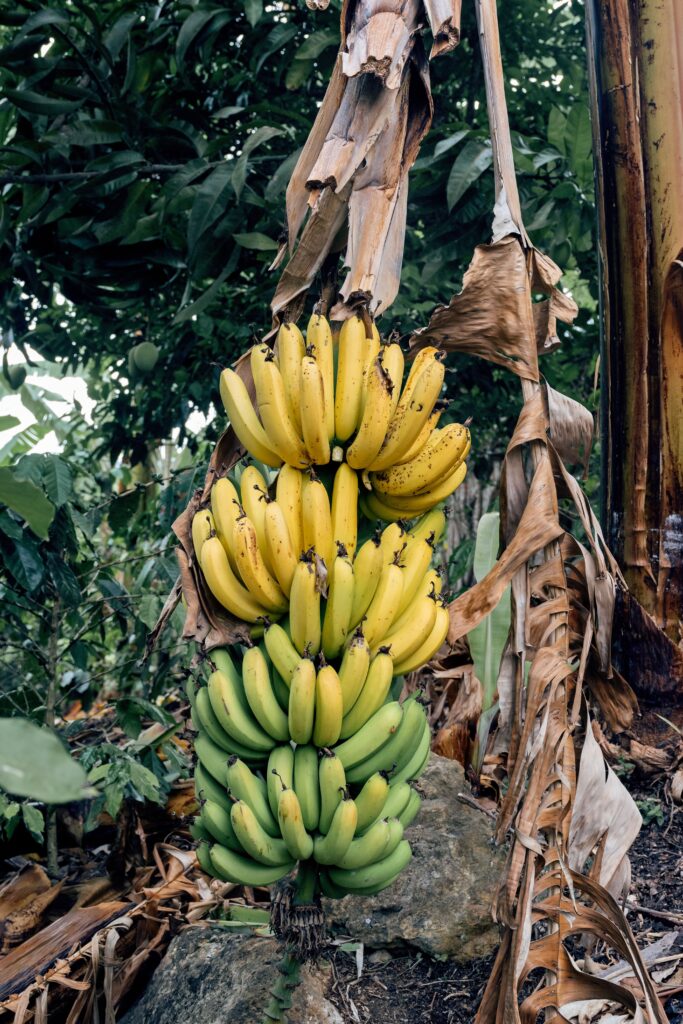
Almost every banana sold internationally today is the same variety: Cavendish. That wasn’t always true, and the reason it changed is the same reason Ecuador is watching a single farm in El Oro province very closely right now.
What happened
In September 2025, a suspected case of Fusarium Race 4 Tropical (TR4) — a soil-borne fungal disease — was identified at a single farm in Santa Rosa, El Oro province. Ecuador’s agricultural health authority, Agrocalidad, responded by declaring a phytosanitary emergency and establishing quarantine and biosecurity protocols around the affected site. As of the containment measures, authorities confirmed no impact on exports, domestic consumption, pricing, or fruit quality elsewhere in the country — this is a contained, farm-level situation, not a national supply disruption.
Why this particular disease gets more attention than most
Fusarium TR4 belongs to the same broad category of soil fungus that already reshaped the global banana industry once. Until the mid-20th century, the dominant export banana wasn’t Cavendish — it was Gros Michel, a variety considered by many to have superior flavor and shipping durability. Gros Michel was effectively wiped out of commercial export by Fusarium Race 1, known then as “Panama disease.” Cavendish became the global standard specifically because it resisted that race of the fungus.
Fusarium TR4 is a different, more recently identified race — one Cavendish does not resist the way it resisted Race 1. It has already devastated banana production in parts of Asia, Australia, Africa, and more recently Latin America, where Colombia confirmed its first case in 2019.
Why containment strategy matters as much as detection
Fusarium spores survive in soil for decades and spread through contaminated soil, water, plant material, or equipment — not through the air, and not through the fruit itself. That’s precisely why quarantine and biosecurity protocols at a single affected site are the correct response, rather than something that would need to affect national supply: the disease is a soil and logistics problem, containable through strict controls on movement in and out of an affected zone, not a fruit-safety issue that spreads on its own.
What this means for buyers today
Nothing has changed about the safety, availability, or quality of Ecuadorian banana available for export as a result of this single, contained case. What has changed is that Ecuador’s industry — and Ecuadorian exporters specifically — now have direct, recent experience managing exactly the kind of biosecurity protocol that TR4 containment requires, rather than a hypothetical understanding of the risk.
The honest long-term picture
TR4 is a genuine long-term threat to the global Cavendish-dependent banana trade, the same way Race 1 was to Gros Michel. That’s not an Ecuador-specific problem — it’s an industry-wide one, and it’s part of why some producers globally are already researching TR4-resistant Cavendish alternatives. For now, the relevant fact for a buyer evaluating Ecuadorian supply is straightforward: one contained case, handled through established protocol, no confirmed spread beyond the original site as of this writing.
Sourcing through KATUNA Trade
KATUNA sources Cavendish banana and plantain from producers across Ecuador’s growing regions and tracks biosecurity developments like this one as a standard part of supplier due diligence — not as a reaction to a specific buyer’s concern.