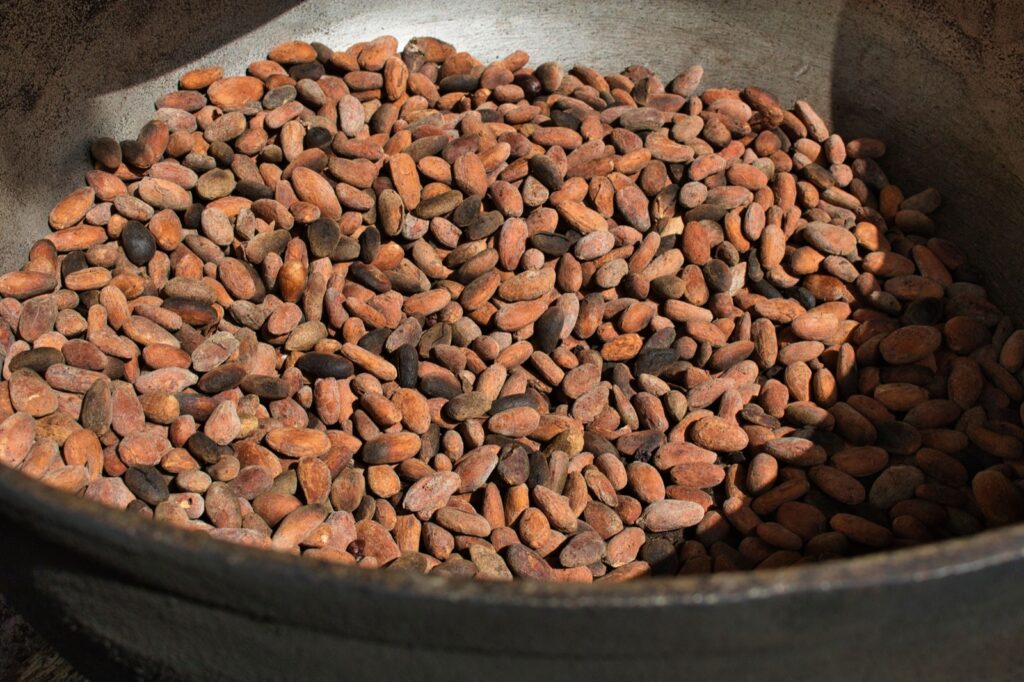
Of the roughly five million tons of cocoa produced worldwide each year, only 5–8% qualifies as fine flavor — the segment the trade calls fino de aroma. It is the raw material behind virtually every premium chocolate bar on the market, and Ecuador produces more than 56% of the world’s supply. If you buy for a premium chocolate brand, understanding this category is not optional.
What makes cocoa “fine flavor”
Fine flavor is a formal designation recognized by the International Cocoa Organization (ICCO), reserved for origins whose beans deliver aromatic complexity beyond basic chocolate notes: floral, fruity, nutty and spice profiles that survive fermentation, drying and roasting. Bulk cocoa — the Forastero beans that dominate world volume — delivers chocolate intensity but little else. Fine flavor delivers a sensory signature.
Cacao Nacional: Ecuador’s crown jewel
Ecuador’s flagship is Cacao Nacional, historically traded as Arriba for the upriver farms of the Guayas basin where it was first shipped. A well-fermented Nacional bean offers the profile that made Ecuadorian cocoa famous: jasmine and orange blossom florals, fruit notes running from citrus to red berries, and a clean nutty finish. For bean-to-bar makers in Belgium, Germany, Japan and the US craft scene, Nacional is a benchmark origin they build entire product lines around.
And CCN-51: the volume engine
Alongside Nacional, Ecuador grows CCN-51, a high-yield hybrid developed locally in the 1960s. It is disease-resistant, productive, and drives much of Ecuador’s export volume growth. Its flavor profile is different — closer to bulk cocoa, though good post-harvest work narrows the gap. Serious buyers specify which variety they need; serious suppliers keep them separate and documented from farm to container.
Why the premium is real
Fine flavor cocoa consistently trades above bulk West African cocoa, with premiums that vary by grade, fermentation index and certification but persist through every market cycle. The economics are simple: supply is capped by genetics and geography, while demand from premium chocolate keeps expanding. Certifications amplify the premium — Ecuadorian lots are available as organic, Fair Trade and Rainforest Alliance certified, always backed by AGROCALIDAD phytosanitary control.
Ecuador’s supply base
Behind the category stand more than 400,000 Ecuadorian farming families, most working small agroforestry plots where cocoa grows under shade alongside plantain and timber species. The equatorial climate delivers two harvests per year, smoothing supply in a way single-harvest origins cannot. This structure — smallholder agroforestry with low deforestation pressure — is also why Ecuador adapts faster to EU traceability rules than competing origins.
Specifying your purchase
Buyers should define: variety (Nacional vs CCN-51), fermentation index (75%+ is achievable for premium lots), humidity, bean count, and certification requirements. FOB Guayaquil and Puerto Bolívar are the standard shipping terms.
Want to taste the difference? Request fine flavor cacao samples from KATUNA Trade — verified at origin, documented for export, and matched to your flavor specifications.