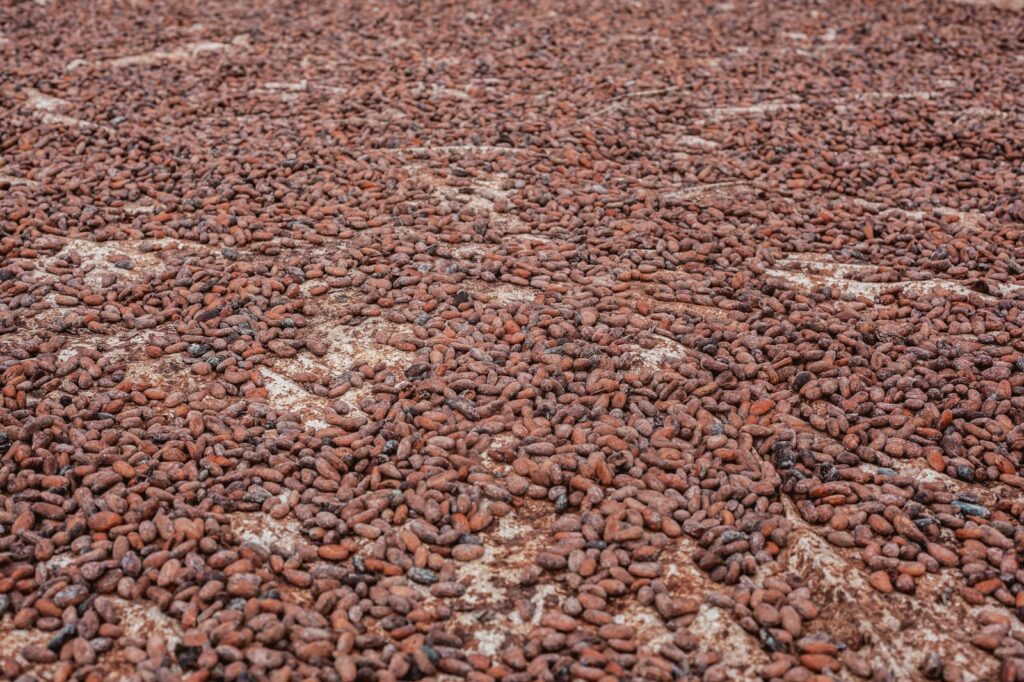
Premium cacao wholesale deals fail for boring reasons far more often than dramatic ones. It’s rarely fraud — it’s a missing phytosanitary certificate at customs, a lot that doesn’t match the sample that was cupped six weeks earlier, or a supplier who can’t say which farm a “single-origin” claim actually traces to. Every one of those problems is avoidable if you verify the right things before you place the order, not after the container is already at sea.
Here’s what to check with any cocoa beans exporter before you commit wholesale volume.
1. Phytosanitary certification (AGROCALIDAD)
This is non-negotiable and should never be a “we’ll get it before shipping” answer. Ask to see current AGROCALIDAD certification for the specific lot you’re buying, not a general company certificate that may not cover this harvest.
2. Official grading documentation
Ecuador’s cacao grading standard, NTE INEN 176, defines specific tiers by moisture content, fermentation quality and defect rate. A legitimate exporter can tell you exactly which grade your lot falls under and produce the cut-test results behind that classification. “Premium” as a marketing word means nothing without a grade behind it.
3. EUDR traceability readiness
If your cacao is headed to the EU, farm-level geolocation and chain-of-custody documentation aren’t optional extras anymore — they’re close to a market-access requirement under the EU Deforestation Regulation. Ask specifically whether the exporter can trace your lot to farm-level coordinates, not just to a region or a province.
4. Farm-level sourcing verification — not just paperwork
Certificates can be real and the underlying sourcing still be loosely managed. Ask whether the exporter conducts farm visits as part of supplier verification, or whether they’re reselling volume aggregated by someone else further up the chain. The more intermediaries between you and the farm, the more places quality control can quietly slip.
5. Sample-to-shipment consistency
The bean that got cupped and approved should be the bean that ships. Ask how the exporter guarantees this — some run a second cut test on the actual export lot before loading, not just on the original sample sent for approval. If nobody can explain how they prevent a sample-to-shipment mismatch, assume it can happen.
6. Logistics certification (BASC)
For the shipment itself, BASC-certified logistics partners matter more than buyers often realize — it’s a security certification that reduces the risk of cargo tampering or unauthorized cargo insertion during transit, which is a real (if rare) risk on international routes.
7. Consolidation transparency
Most export-minimum containers (roughly 13–14 metric tons at standard sack weights) represent volume consolidated across several producers, not one farm. That’s normal — but you should know it. If single-origin traceability matters for your product’s story, ask directly how many farms are blended into your specific lot, and whether that can be documented per farm rather than as an aggregate.
How KATUNA Trade meets this checklist
KATUNA Trade coordinates AGROCALIDAD certification, grades every lot against NTE INEN 176, maintains EUDR-ready farm-level traceability, and works with BASC-certified logistics partners for shipment. Sourcing runs through verified producer relationships across Ecuador’s coastal, Andean, Amazon and contracted Galápagos growing regions — with documented consolidation when a container blends volume across producers. See our full guide on buying Ecuador cocoa beans direct from origin for the buyer-side view of this same process.
Request a sample and we’ll walk you through the documentation behind it before you place a wholesale order.