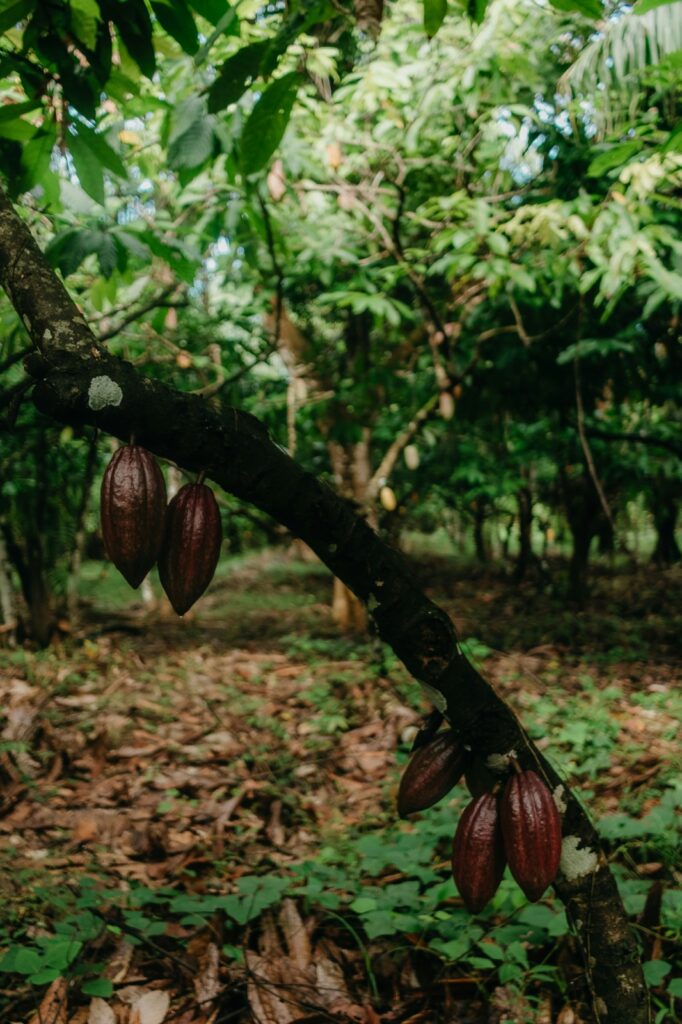
For most of modern history, the story of chocolate started in Mesoamerica — the Olmecs, then the Maya, then the Aztecs, then Europe. It’s a good story. It’s also, according to the archaeological record, roughly 1,500 years too late.
What was actually found
In the early 2000s, a team of Ecuadorian and French archaeologists surveying Zamora-Chinchipe province, in Ecuador’s southern Amazon, began cataloguing sites in a densely forested region known as the Ceja de Selva. One site, near the town of Palanda, stood out: Santa Ana-La Florida, home to the Mayo-Chinchipe-Marañón culture.
Ceramic vessels recovered from the site were tested for starch grains and chemical residue markers specific to cacao — theobromine among them. The results, radiocarbon-dated and later confirmed through further research led by archaeologist Francisco Valdez, placed cacao use at the site at roughly 5,300 to 5,500 years ago. That’s the oldest confirmed evidence of cacao use anywhere in the Americas — older than any comparable Mesoamerican find by about 1,500 years.
In 2025, Ecuador’s National Assembly formally recognized this: Palanda was declared the origin of cacao, following a year of research coordinated with the journal Nature, cementing what archaeologists had argued for over a decade.
Why this matters beyond the history
The variety of cacao identified at Santa Ana-La Florida wasn’t a generic ancestor of what’s grown today — researchers identified it as related to the same “fine flavor” lineage that Ecuador’s Nacional cacao descends from. In other words: the genetic and cultural roots of the cacao fine chocolate makers seek out today trace back to this exact region, in this exact form, five millennia ago. The Mayo-Chinchipe-Marañón culture didn’t just harvest wild cacao — the evidence points to early cultivation and social use, likely including ceremonial and trade functions, well before cacao became the currency-like commodity it was later known as among Mesoamerican civilizations.
From the Amazon outward
The current archaeological consensus, per Valdez’s research, is that cacao moved outward from the Amazon — carried north over centuries, eventually reaching Mesoamerica, where it took on the cultural and economic significance most people associate with its history today. Ecuador wasn’t a footnote in chocolate’s story. It was the starting point.
What this means for a cup of cacao today
There’s a direct line, not just a poetic one, between what was found at Santa Ana-La Florida and what KATUNA sources today. Ecuador’s Nacional (Arriba) cacao — the variety behind the country’s position as the source of more than half the world’s fine flavor cacao — carries the genetic legacy of the same lineage identified at that 5,300-year-old site. When a buyer asks what makes Ecuadorian cacao different, the honest answer starts further back than most sourcing guides go: this is where cacao itself began.
KATUNA Trade sources fine flavor cacao and CCN-51 directly from producers across Ecuador’s coastal, Andean, Amazon and contracted Galápagos growing regions — including the Amazon basin that gave cacao its start. Explore the full origin guide →