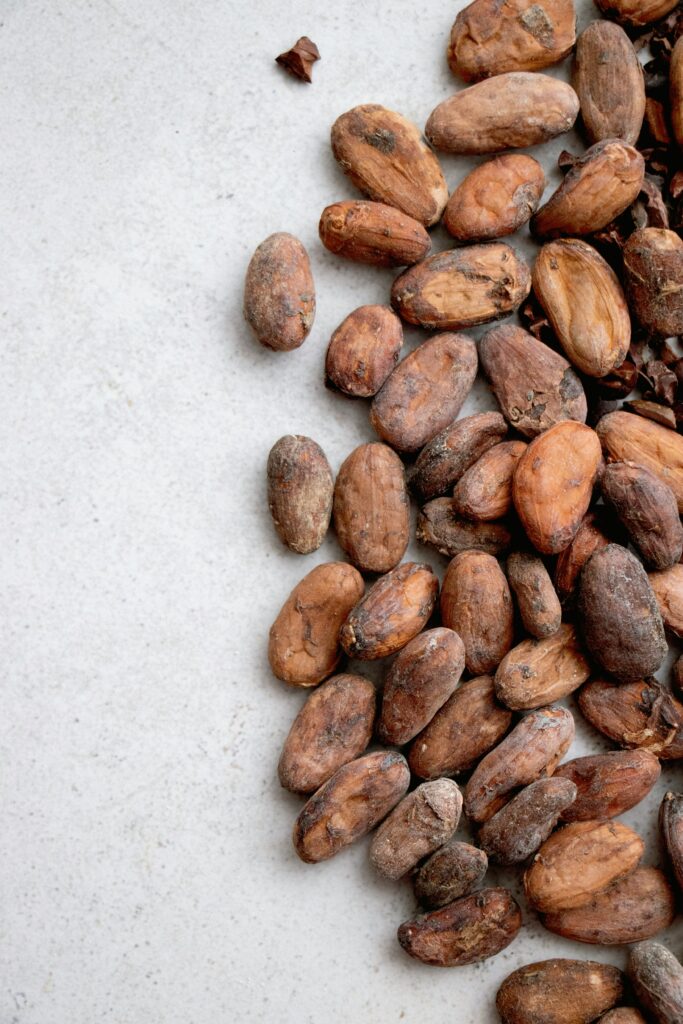
If you’re evaluating cacao beans in bulk, you probably don’t need the origin story or the tasting notes — you need to know how much you have to buy, how it’s packed, and roughly what it costs. Here’s the direct version.
Minimum order quantity
Bulk cacao is sold by the container, not by the bag. A standard 20′ container holds approximately 200-210 sacks of 60-65 kg each, totaling roughly 13-14 metric tons. That’s the practical minimum for a bulk purchase directly from an exporter — it’s the volume that makes consolidation, certification, and shipping logistics work economically for both sides.
If your volume need is smaller than a full container, that’s still workable, but it typically means either waiting to consolidate with another buyer’s order or paying a premium that reflects the exporter’s reduced logistics efficiency at smaller scale — worth asking about directly rather than assuming it’s not possible.
Packing format
Cacao beans for export ship in jute or polypropylene sacks, 60-65 kg each, the standard format across Ecuadorian exporters. Sacks are palletized and loaded to fill the container efficiently — this isn’t a format you typically negotiate, it’s the industry standard for a reason: it balances handling weight, ventilation (critical for beans that need to stay dry), and stacking efficiency in the container.
What determines pricing
Bulk cacao pricing isn’t a flat rate — it moves with several factors, and understanding them helps you evaluate whether a quote is reasonable:
- Grade, per Ecuador’s official NTE INEN 176 standard — well-fermented beans (ASSPS/ASSS grades) command a premium over lower grades (ASN/ASE), and CCN-51 typically prices differently than fine flavor Nacional/Arriba.
- Global market price movement — cacao is a commodity with real price volatility tied to global supply (West African harvest conditions in particular move the benchmark price significantly).
- Certification — organic, Fair Trade, or EUDR-compliant traceability typically carries a premium over uncertified beans, reflecting the additional verification and documentation work involved.
- Incoterms — a quote FOB Guayaquil is a different number than one landed at your port (CFR/CIF), and comparing quotes across suppliers only works if you’re comparing the same Incoterm.
We’re not going to publish a specific price here — cacao pricing moves too often for a static number to stay accurate, and quoting a stale figure would do you more harm than good. Ask for a current quote directly instead of anchoring on a number that may already be outdated by the time you read this.
Moisture and quality verification
Every lot should come with moisture content at or below 7% (the ceiling across all NTE INEN 176 grades) and documented fermentation quality via the standard “cut test.” If a supplier can’t produce this documentation for the specific lot you’re buying — not a generic company certificate — that’s worth treating as a red flag before committing to a bulk order.
Getting a real quote
KATUNA Trade sources fine flavor Nacional/Arriba and CCN-51 cacao directly from verified Ecuadorian producers, consolidating volume to meet standard container minimums. See our full sourcing process, or reach out directly with your target grade and volume for a current quote.