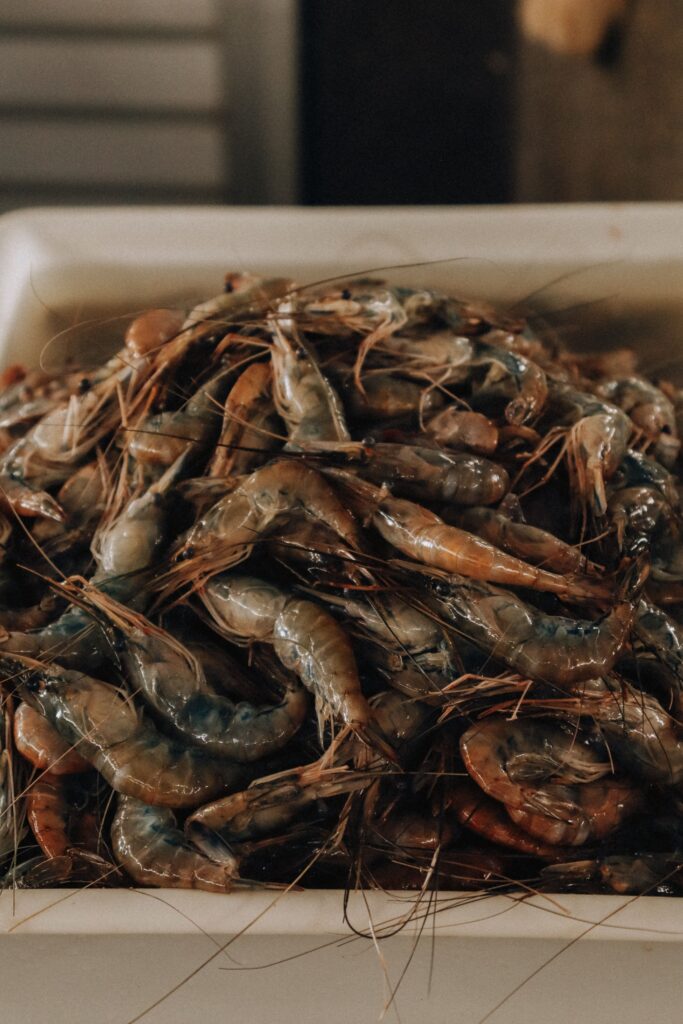
On a restaurant menu or a seafood counter, black tiger shrimp and white shrimp can look almost interchangeable — both are farmed, both show up frozen or fresh, both get sold by count-per-pound. The differences that actually matter are underneath that surface.
Two different species, not two names for the same thing
White shrimp — Litopenaeus vannamei, also called Pacific white shrimp or whiteleg shrimp — is the species behind the overwhelming majority of farmed shrimp sold globally, including virtually everything Ecuador exports. Black tiger shrimp (Penaeus monodon) is a distinct species, generally larger, with the dark banded shell pattern that gives it its name.
Why white shrimp dominates farming
White shrimp became the global standard for reasons that come down to farming economics more than flavor: it reaches market size faster (roughly 100-120 days), tolerates a wider range of pond conditions, requires a lower-protein feed than black tiger shrimp, and handles higher stocking densities with less aggressive behavior between animals. None of that makes it inherently “better” — it makes it more efficient to farm at the scale global demand requires.
Where black tiger shrimp still holds an edge
Black tiger shrimp is generally considered to have a more pronounced flavor and a visually striking shell — some buyers specifically seek it out for presentation or taste reasons, particularly in markets and cuisines where it’s traditionally featured. It’s also typically larger at harvest, which matters for buyers whose spec calls for bigger count sizes. The tradeoff is farming difficulty: it’s harder to farm at the same density and consistency as white shrimp, which shows up in price and availability.
What this means for sourcing
If your spec calls for white shrimp, you’re almost certainly sourcing Litopenaeus vannamei — Ecuador’s dominant export species, farmed here at low density using the extensive model that differs meaningfully from high-density farming common elsewhere. We’ve written separately about why that farming model matters for consistency and disease risk.
If your spec specifically calls for black tiger shrimp, that’s a different sourcing conversation — it’s a different species with a different supply base, and not every exporter (including most Ecuadorian ones) works with both.
The practical takeaway
“Shrimp” isn’t one product with size variations — it’s multiple species with genuinely different farming systems, flavor profiles, and supply chains behind them. Knowing which one you actually need before requesting quotes saves a round of back-and-forth with any supplier.
Sourcing white shrimp from Ecuador
KATUNA Trade sources Litopenaeus vannamei directly from producers across Ecuador’s five shrimp-farming provinces. See our full shrimp sourcing guide or reach out directly with your target count and format.